Environmental simulation cabinets are laboratory devices that allow the simulation of the exposure of products to different climatic and weather conditions - salt permeability, humidity, temperature, cyclical changes and UV radiation. With the right equipment, you can test the durability of a product's finish in your own production laboratory, without having to send products to external test laboratories.
Elister offers environmental imitation cabinets that meet international standards (ISO 9227, ASTM B117, ISO 6270) and are suitable for the needs of the paint industry, automotive industry, coatings manufacturers and research institutes. The solutions are based on technology from Caron, C&W and other renowned manufacturers.
Environmental imitation cabinets are essential wherever a product is subject to finish durability requirements: automotive and parts manufacturers, powder and liquid coatings industries, metal fabricators, electronics, medical device manufacturing and research and development laboratories. The choice of the right instrument depends on the material to be tested, the desired standard and the required production volume.
An environmental simulation cabinet is a laboratory device that creates an atmosphere under controlled conditions that mimics the environment in which the product is used - salt, humidity, temperature changes or UV radiation. It is used to assess the durability of finishes, paints and coatings before a product is placed on the market or delivered to a customer.
The most important are ISO 9227 (salt spray test), ASTM B117 (salt spray test), DIN 50021 (salt spray test), ISO 6270 (condensate moisture test) and ISO 16474 (UV test). These standards define the test conditions, the duration and the methodology for evaluating the results.
The salt spray test (ISO 9227) is a continuous test in which the product is constantly in a salt spray environment. The cyclic corrosion test combines salt spray with drying phases and humidity phases to more realistically mimic outdoor conditions. Cyclic tests generally give a more accurate prediction of the actual service life of the product.
The choice depends on four factors: the required standard (ISO/ASTM/DIN), the size of the test room (laboratory vs. component testing), the required parameters (salinity, humidity, temperature, UV) and the intensity of use. Elister can help you make the right choice during a free consultation.
A standard salt spray test lasts from 24 to 1000 hours, depending on the requirements of the material and the sector being tested. In the automotive industry, cycles of 240-720 hours are often used, in architectural coatings up to 1000 hours or more. Cyclic tests are typically 6-12 weeks.
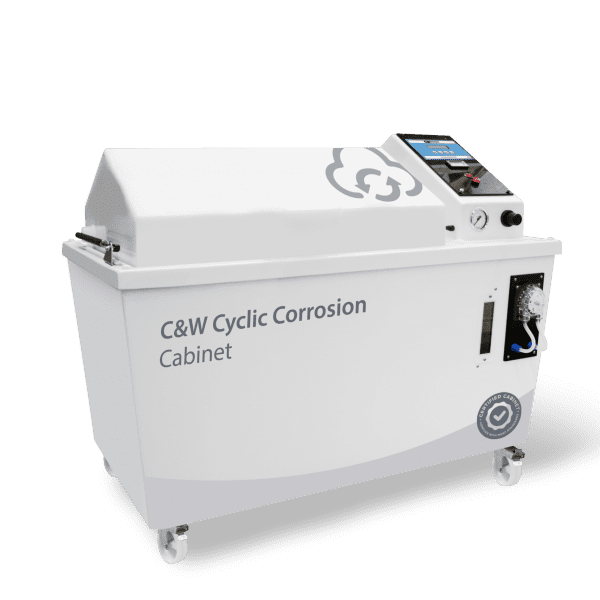
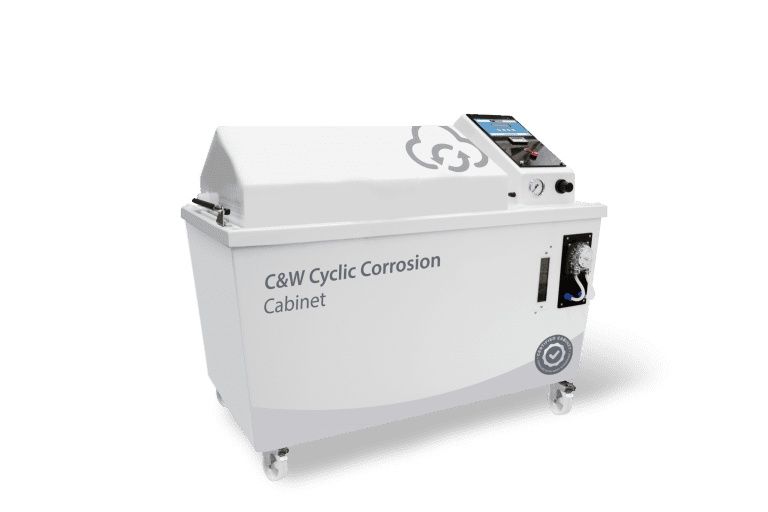
The C&W Cyclic Corrosion Cabinet (CCT) is an industrial test equipment for precise environmental testing: salt spray, up to 98% humidity, temperature up to 70°C. Models for all sectors - from automotive to aerospace.
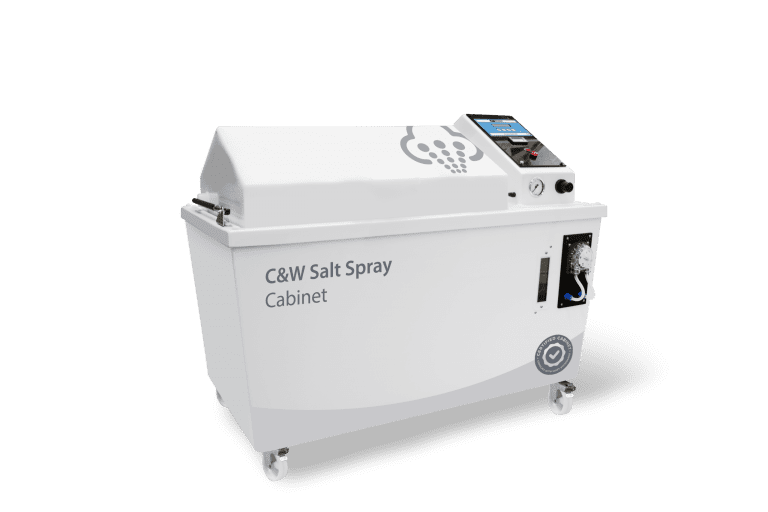
The salt test booth is designed to test both components and coated test plates across the full spectrum of industry. The instruments are reliable, easy to use and of robust construction. Salt test booths provide the precise environmental test conditions required by industry today. Thanks to their reliability, ease of use and robust construction, salt spray booths have gained worldwide acceptance with applications in all major sectors from automotive to paint, [...]
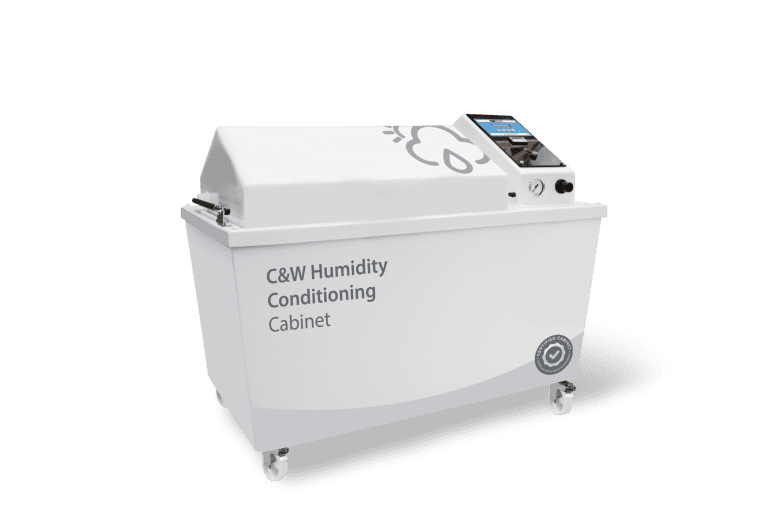
A humidity conditioning chamber is an industrial test device for precise control of temperature and humidity. The C&W Humidity Conditioning Cabinet allows simulation of changing environmental conditions for testing the durability, stability and quality of products and materials. Models 200, 450, 750, 1000 and 2000 litres.