When using protective coatings, it is necessary to measure the surface hardness before painting. The profile and roughness of the surface will directly affect the adhesion of the coating - a surface that is too smooth will not hold the coating, a surface that is too rough will require more material to fill the voids between the “peaks”.
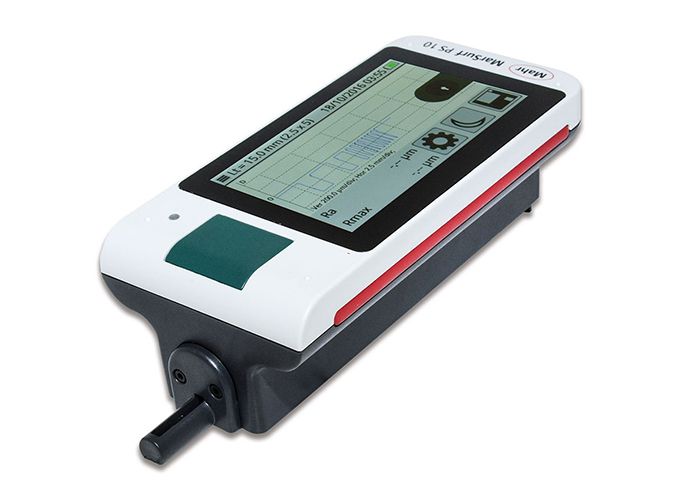
Elcometer hardness testers are lightweight, portable measurement solutions for a wide range of surface roughness measurements in a variety of environments.
Cleaning the steel (e.g. after sandblasting) produces a surface profile that must meet the paint manufacturer's requirements. Too low a hardness (Ra 100 μm Rz) means wastage of material and potential “clean top” corrosion problems.
Hardness determines how well the coating adheres to the surface (adhesion). Correct hardness ensures optimal anchorage, which means longer coating life and better corrosion protection. A surface that is too smooth will not provide sufficient mechanical bonding; a surface that is too rough will require more dye and leave uncoated “peaks”.
Ra is the arithmetic value of the average roughness; Rz is the value of the average heights (5 highest peaks + 5 deepest valleys). In the surfacing industry, Rz is the preferred value because it correlates better with adhesion and material consumption. ISO 8503 and SSPC-VIS standards refer to Rz values.
Main standards: ISO 8503-1 (standard profiles for steel), ISO 8503-4 (stylus instrument method), ISO 8503-5 (replica tape method / Testex), SSPC-PA 17 (US standard). Elister can help you to select the appropriate measuring instrument according to the applicable standard.
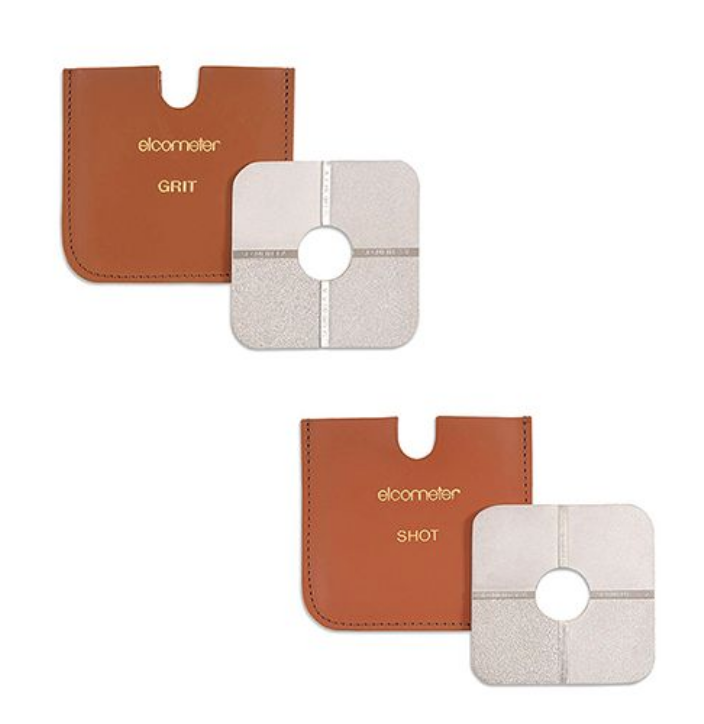
Elcometer 125 Waxed Surface Reference Plates are the reference standard for assessing the profile of a cleaned metal surface prior to painting or protective coating. The comparator allows a visual and tactile comparison of the profile of the wetted surface with four known profile values on the same plate. The Elcometer 125 is available in two versions, Grit (angular profiles produced by blasting with steel wool) and Shot (round profiles produced by blasting with steel balls). All profiles are recorded in microns and comply with international [...]