Local exhaust is the most effective solution for welding ventilation - the exhaust arm or cabinet is installed directly near the welding point, removing welding fumes where they occur. The solution is suitable for industries where welding is carried out at fixed workstations and where the products are of standard/smaller dimensions. Elister complements spot welding systems with automation that controls the position of the blade and adjusts the fan speed according to the actual load.
Local exhaust ventilation removes welding fumes at source - 10-50x more efficient than general ventilation. General ventilation dilutes the fumes, but the worker is still exposed. Local exhaust is the only way to fully protect workers.
The suction arm should be located at a maximum distance of 30-50 cm from the welding arc - this will ensure sufficient suction force. Further away, the efficiency decreases dramatically. The automatic retraction arm solves this problem by means of sensor control.
Yes - Elister can design a system for a point-of-use pull-out as a stand-alone solution or as an integrated solution into an existing piping system. The filtration system can be shared between several workstations.
In Estonia, the Occupational Health and Safety Act and the European standard EN ISO 21904 on welding ventilation apply. In ATEX environments, the requirements of Directive 2014/34/EU apply. Elister can help you choose a solution that complies with the standards.
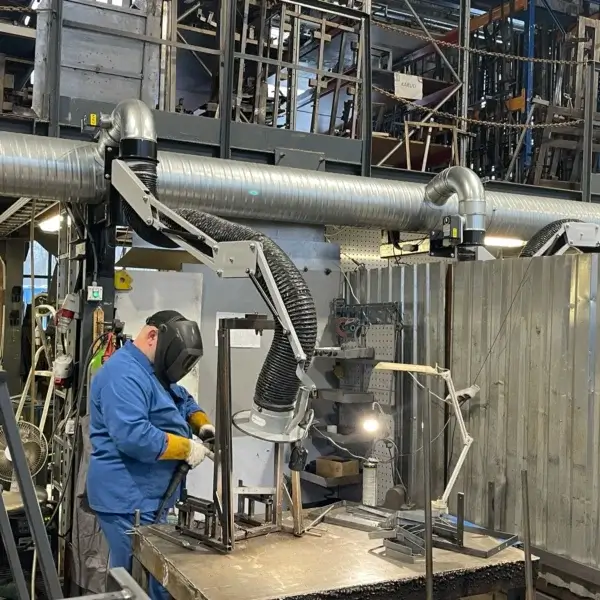
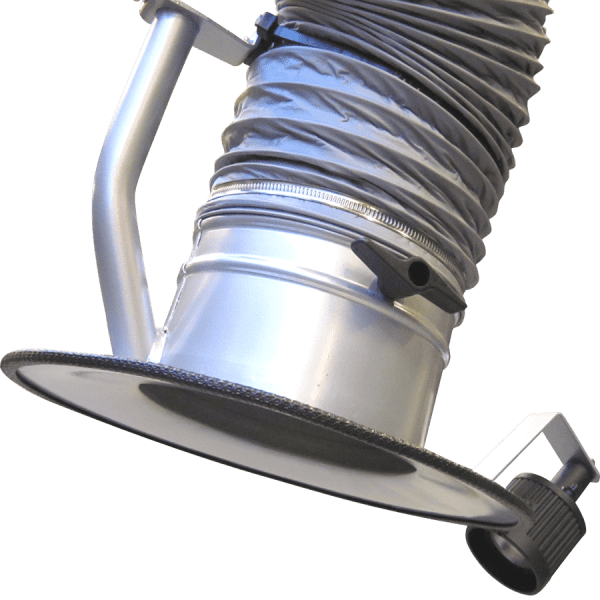
Weld fume extraction directly next to the work process is the most effective method.
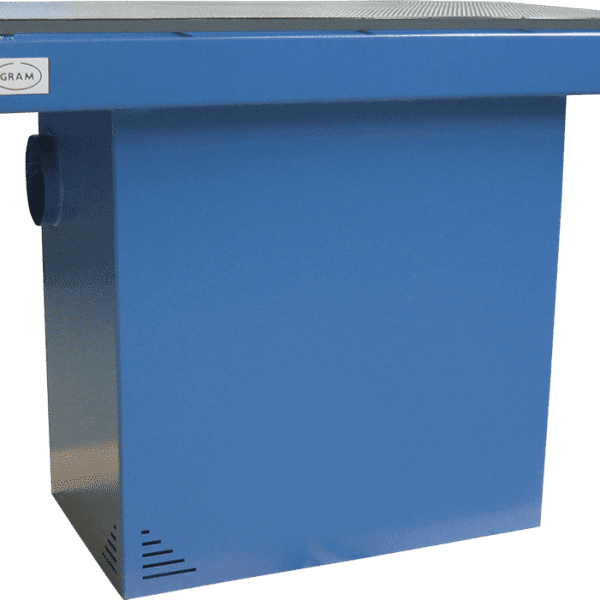
The best way to set up a welding workstation is to have a welding table designed for this purpose, with a place for the welding workpiece to rest
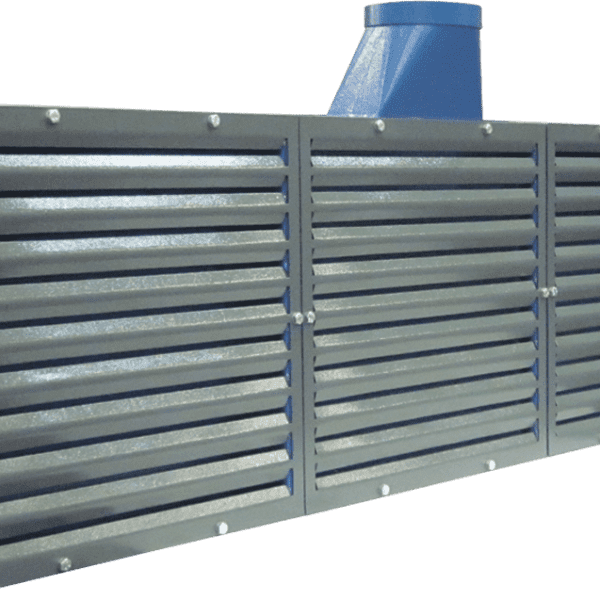
If, in addition to welding, grinding/grinding operations are also carried out, it would be useful to add a corresponding extraction wall to the table.