The correct paint or coating thickness is an important parameter for surface treatment. The strength and durability of the paint surface is based on the correct application of this system, following the specification sheet of the paint manufacturer. Each coat, from the primer to the topcoat and the individual intermediate coats, is precisely defined with minimum and maximum coating thicknesses.
A coating that is too thin will not protect against corrosion, while a coating that is too thick will crack and peel. Accurate measurement ensures stable quality and reduces material wastage.
We propose two main measurement principles:
The Elcometer range includes simple pocket devices to professional Bluetooth devices that transmit data directly to the ElcoMaster app. Most popular models: Elcometer 456 (dual-mode), Elcometer 415 (economical version), Elcometer 500 (ultrasonic thickness gauge).
Coatmaster specialises in measuring layer thickness in situations where conventional equipment will not work - namely when the paint is still wet or the powder coating has not yet set in the oven.
Wet film measurement (wet film) allows you to check the thickness of a fresh coat of paint or varnish immediately after application, before it dries. This is particularly important on production lines, where early detection of a problem prevents the need to recoat an entire batch.
Measuring the powder colour before the baking oven is one of the main uses of Coatmaster. Electrostatically sprayed powder is still a loose powder before it goes into the oven, which cannot be measured by conventional contact meters. Coatmaster uses a non-contact measuring principle that determines the exact thickness of the powder layer before baking - allowing corrections to be made before the wrong thickness has already hardened and the part needs to be reprocessed.
Coatmaster equipment is actively used:
The coating thickness gauge measures the thickness of the paint, varnish or other coating on the surface without damaging the material. It is needed whenever compliance with the paint manufacturer's specification and standards such as ISO 19840, ISO 2178 or SSPC-PA2 needs to be checked. An insufficient coating will cause corrosion, while too thick a coating will cause cracks and increase material consumption.
The magnetic measuring principle is suitable for measuring non-magnetic coatings on a ferromagnetic substrate (e.g. painted steel, zinc mesh). The method based on current conductivity is suitable for non-ferromagnetic substrates (aluminium, copper, stainless steel). Dual-mode instruments such as the Elcometer 456 automatically detect the substrate.
Conventional dry film gauges are not suitable for wet surfaces. Coatmaster instruments are specifically designed for wet film measurement - they use a non-contact measuring principle and also work on powder coating before the oven. This is particularly valuable on powder coating lines where corrections can be made before the paint has hardened.
Electrostatically sprayed powder is a loose powder before the oven which is not measured by conventional contact meters. Coatmaster uses a non-contact method that measures the thickness of the powder layer precisely before it goes into the oven. This allows the necessary corrections to be made before a part with the wrong thickness has already hardened and needs to be reworked.
It is recommended to calibrate at the beginning of each working day, using a zero plate and a standard plate of known thickness. For official certification and audit, the instrument must be calibrated in an accredited laboratory according to ISO 19840 or SSPC-PA2.
The main standards are ISO 19840 (protective colour systems for steel), ISO 2178 (magnetic method), ISO 2360 (current conduction method), SSPC-PA2 (American standard). Elister can help you to choose the right instrument and measurement method according to the standard.
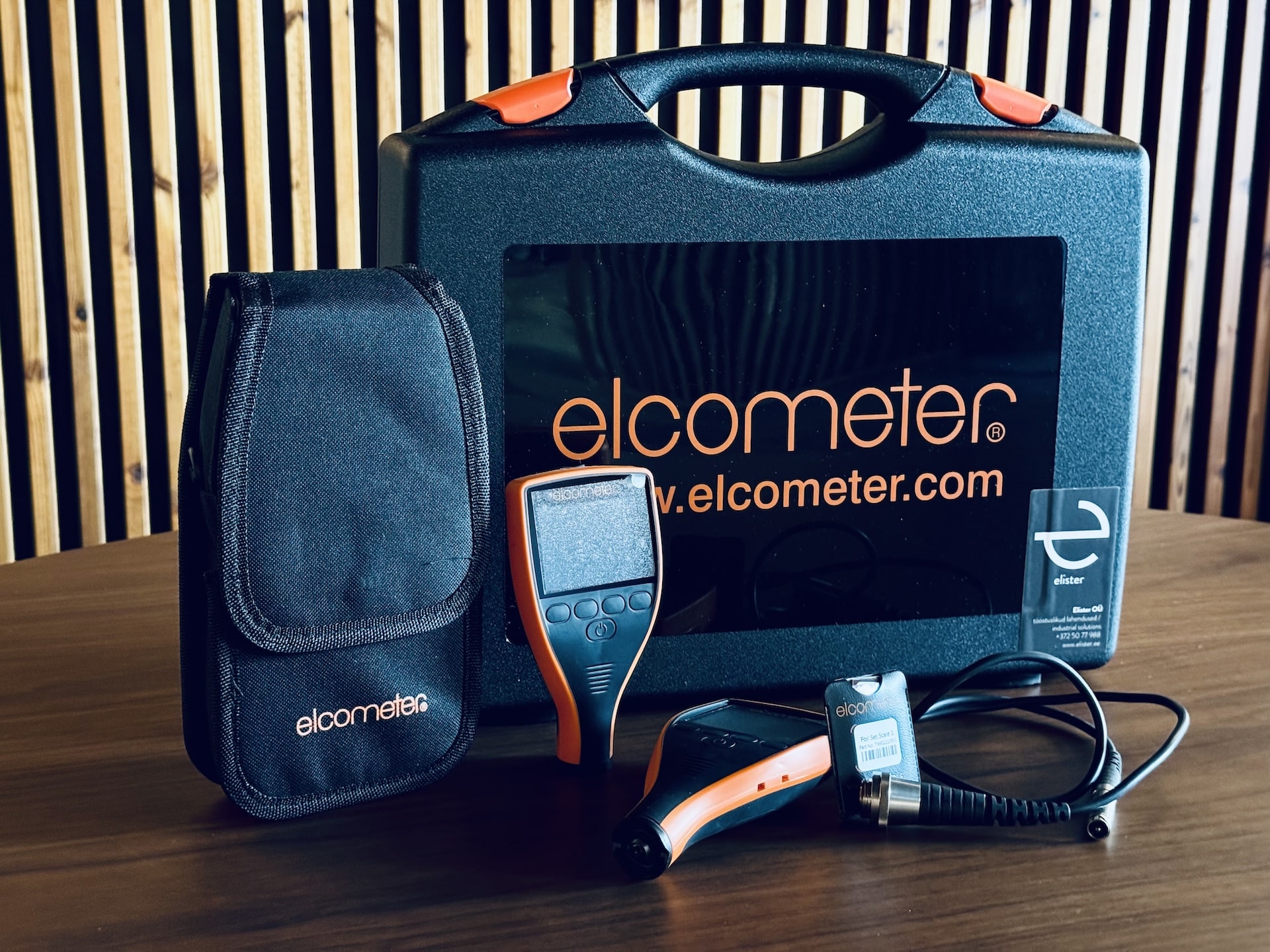
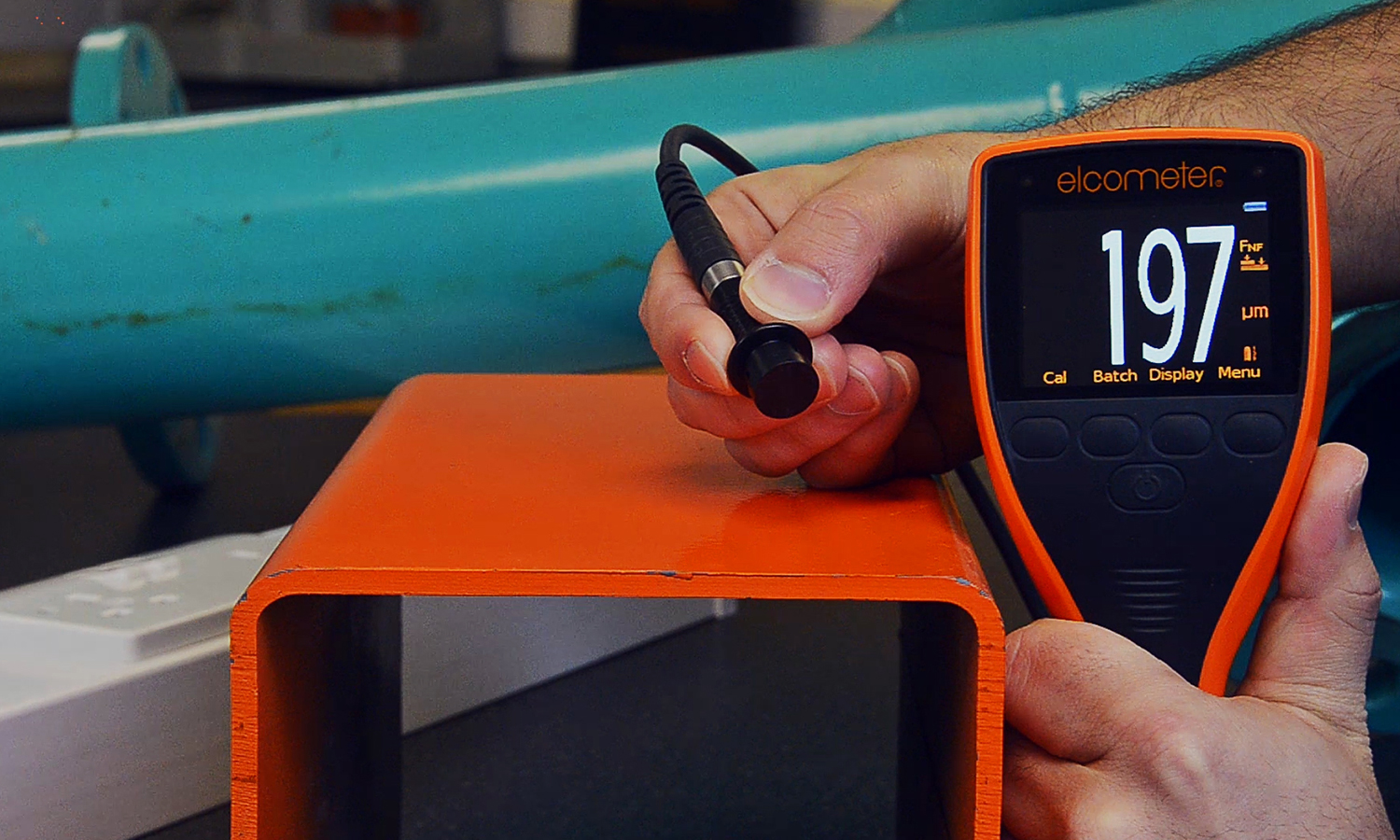
Elcometer devices can be used to check the layer thickness on different surfaces (metal, glass, stone, plastic, wood).
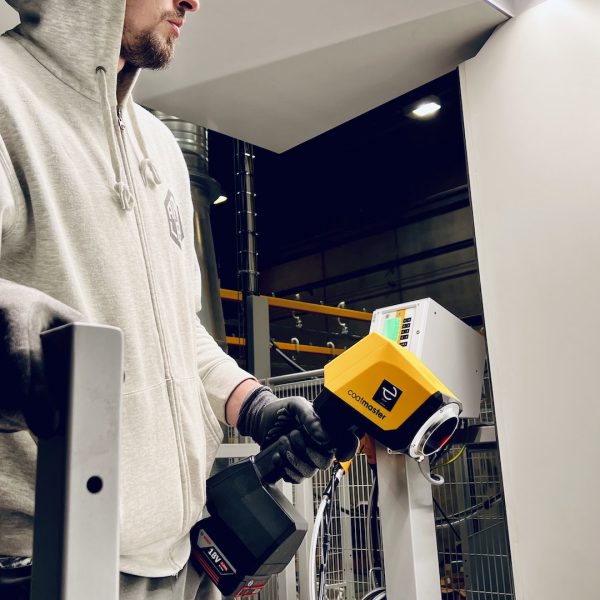
Coatmaster equipment can be used to check the thickness of paint coatings on different surfaces (metal, glass, stone, plastic, wood) in a non-contact way.