STS fire detection and extinguishing systems
Electrostatic powder coating involves the handling of flammable and explosive powder-air mixtures. Flammable powder particles in the booth, filters, and ductwork can cause serious damage—not only leading to production downtime, but also endangering people and equipment. STS fire detection and extinguishing systems These are specialized solutions that detect sparks and fire sources in a fraction of a second and extinguish them before they can develop into an explosion hazard.
Why does a powder coating line require special protection?
- A mixture of powder and air is explosive – The ATEX Directive (1999/92/EC) requires industries to conduct risk assessments and implement protective measures.
- Conventional fire extinguishing equipment (hand-held fire extinguishers, sprinklers) is not suitable – They react too slowly and may even make the situation worse.
- A spark is generated in a matter of milliseconds – Only automatic detection can respond quickly enough.
- Insurers often require a security system – Securing powder coating lines without spark detection is more difficult or more expensive.
Major Hazard Areas in a Powder Coating Line
- Paint Booth – powder + risk of sparks due to electrostatic charging.
- Filters and Cyclones – Powder that has accumulated may catch fire when the filter is cleaned.
- Piping (Exhaust) – Combustible particles move through the system and may ignite there.
- Powder Recovery Systems – fine powder + movement + static electricity = danger.
- Residues from the pre-wash of parts (grease, solvents) – Residues in the powder increase the risk of ignition.
How does the STS system work?
- Identification – Infrared sensors monitor the airflow leaving the cabin through the ducts. A spark or burning particle is detected within milliseconds.
- Activation – The control unit sends an instantaneous command to the shut-off valve.
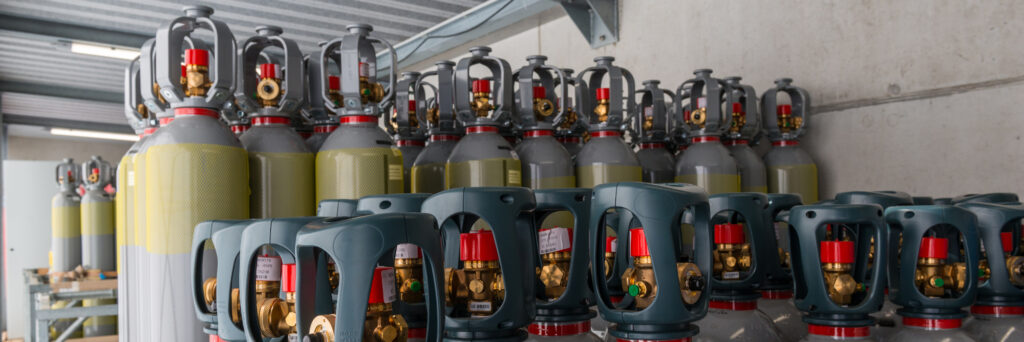
- Deletion – The extinguishing fluid (water or fire-suppressant gas) is sprayed into the ductwork and extinguishes the burning particle before it reaches the filter or cyclone.
- Line Closure – If necessary, the dampers that prevent the fire from spreading through the system close automatically.
- Warning and Logging – The event is logged, an alarm is sent to the operator, and production is halted until the cause is determined.
Components of the STS System
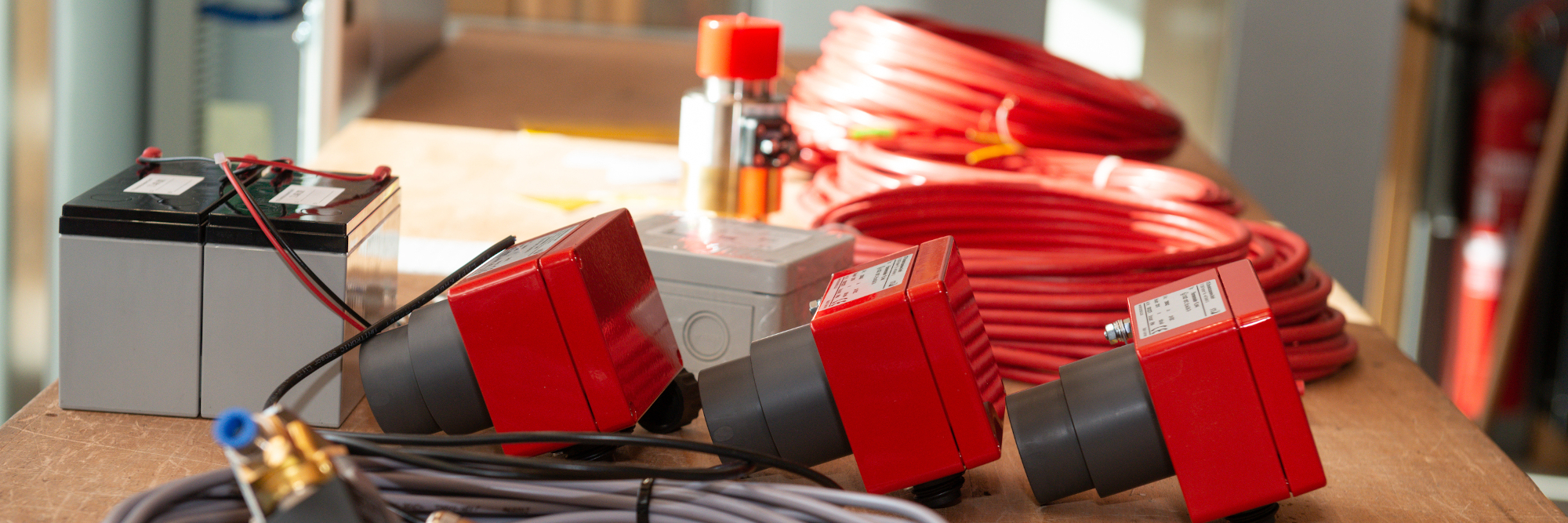
- Spark Detection Sensors (IR) – Installed in the piping, in the cabin exhaust, and in front of the filters.
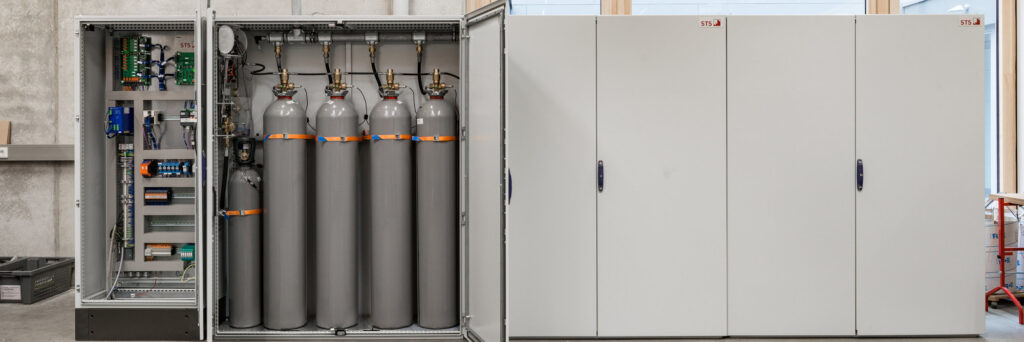
- Main Controller – continuous monitoring, event logging, and alarm notifications.
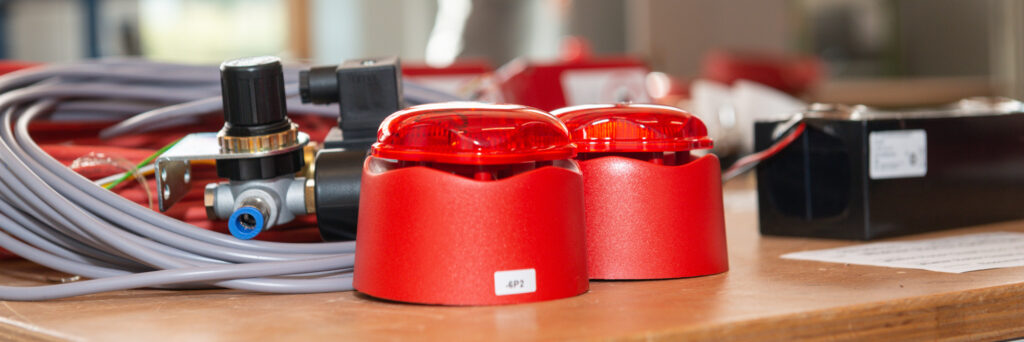
- Shut-off valves and nozzles – Quick-response water sprayers or fire suppression systems.
- Valves (Isolation Valves) – prevent the spread of fire through the piping system.
- Interfaces with Line Control – connection to the coating line control system (Gema MagicControl, PLC).
Who is required to use the STS system?
A fire detection and suppression system is required for all powder coating production facilities that have an automatic spray booth and filters or a cyclonic powder recovery system. It is particularly important that:
- For lines located in an ATEX zone.
- For high-volume production lines where there is a large amount of powder in the piping.
- For multi-color systems where powder movement is intense during color changes.
- For production facilities where the insurer or the Labor Inspectorate requires it.
Consultation and sales in Estonia
Elister designs an STS fire detection and suppression system tailored to your powder coating line, integrates it with your existing control system (Gema MagicControl or another PLC), and handles installation, certification, and regular maintenance. We also assist you with ATEX risk assessments and the preparation of the necessary documentation. Contact us!